


📝 Highlights & Appeal Light spoilers
01① The "are fireworks round or flat?" debate
Before the fireworks festival, classmates debate whether fireworks look round or flat from the side — a lighthearted conversation that becomes the film's central visual motif.
02② Nazuna's invitation to run away together
Facing a forced transfer due to her mother's remarriage, Nazuna asks Norimichi to "run away together" — a moment that sets the entire story into motion.
03③ The mysterious orb that rewinds time
When Norimichi throws the round orb Nazuna once found in the sea, time rewinds — the mechanic that drives the film's time-loop structure.
04④ A love triangle with his best friend Yusuke
Norimichi's best friend Yusuke also has feelings for Nazuna, and their strained, hard-to-be-honest friendship adds emotional complexity to the story.
05⑤ A summer night replayed as endless "what ifs"
The same single night replays again and again with slightly different outcomes each time, cleverly illustrating how each choice reshapes the characters' relationships.
06⑥ SHAFT's distinctive visual style
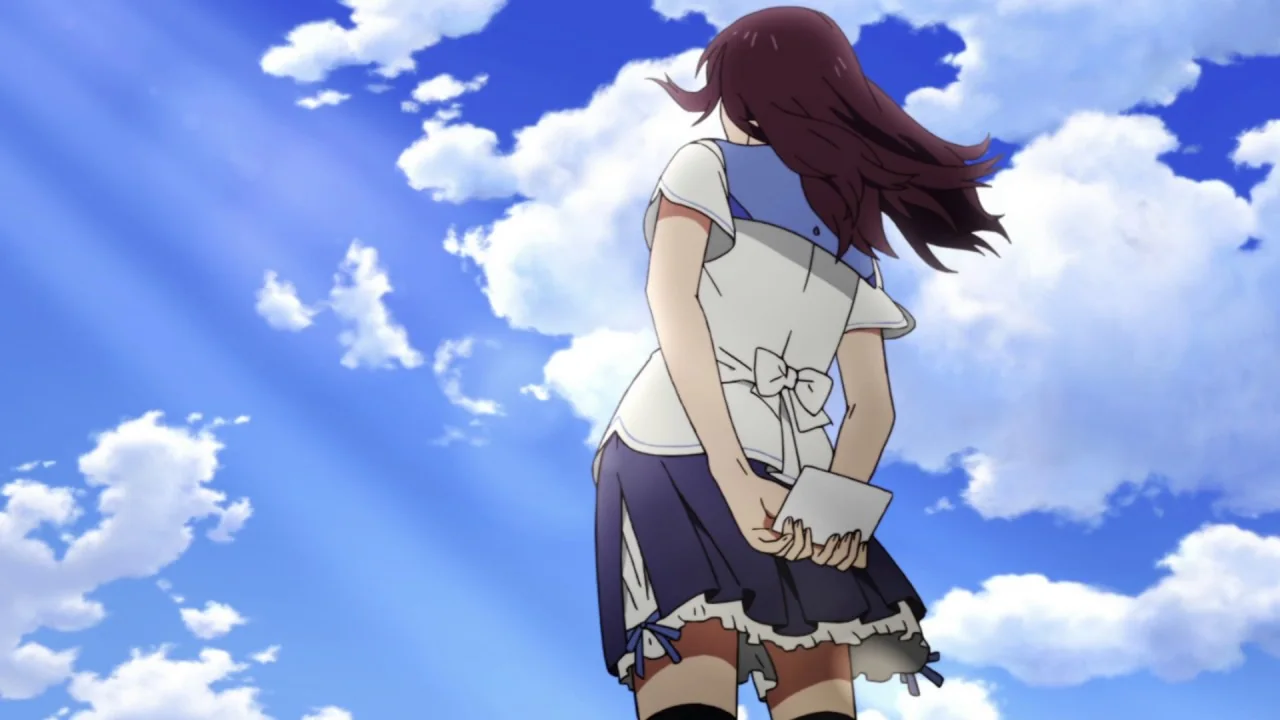
The vivid color palette and striking compositions used to render the fireworks and seaside scenery showcase SHAFT's signature visual style, widely praised by critics and fans.
07⑦ Theme song "Uchiage Hanabi" by DAOKO x Kenshi Yonezu
The theme song "Uchiage Hanabi," a collaboration between DAOKO and Kenshi Yonezu, became a massive hit and is now practically synonymous with the film itself.
08⑧ Voice acting debuts for Suda and Hirose
This film marked Masaki Suda's debut as a voice actor in the role of Norimichi, whose fresh, natural chemistry with Suzu Hirose's Nazuna became one of the film's talking points.
💡 Key Points & Predictions Some spoilers
As a self-contained theatrical film, there's no direct sequel, but in 2020 a re-graded "New Color Grading" edition was released, continuing to bring the film to new audiences in different forms. The theme song "Uchiage Hanabi" has remained widely beloved long after the film's release, cementing its place as one of the defining tracks for both Kenshi Yonezu and DAOKO. Comparing this 2017 film with the original 1993 TV drama and its 1995 theatrical adaptation remains a popular way for fans to appreciate the material.
🧾 Story So Far Contains spoilers
During summer break in a seaside town, Norimichi and his classmates are debating whether fireworks look round or flat from the side, ahead of the local festival. Meanwhile, Nazuna, facing a transfer due to her mother's remarriage, secretly asks Norimichi — who has feelings for her — to run away together. Before they can leave town, however, Nazuna's mother catches them and drags her back. Wracked with regret at failing to save her, Norimichi throws a strange orb Nazuna once found in the sea — and time rewinds to before she was caught. From there, Norimichi keeps replaying the same summer night, making slightly different choices each time.
✅ Recommended Viewing Points
A coming-of-age fantasy that captures the bittersweet ache of first love over a single summer night, wrapped in gorgeous visuals. Watching the original 1993 drama and 1995 theatrical version alongside it adds an extra layer of appreciation, and it's a must for anyone who loves SHAFT's distinctive visual style.
👀 Trivia & Fun Facts
💫 Unresolved Foreshadowing Contains spoilers
- The opening debate about whether fireworks look round or flat hints at the film's larger theme: that how you see something depends entirely on your point of view.
- The true nature of the mysterious orb Nazuna finds in the sea is never fully explained, deliberately left open to the audience's own interpretation.
- Yusuke's inability to be honest about his feelings foreshadows the emotional conflict between friendship and romantic jealousy that erupts later in the film.