


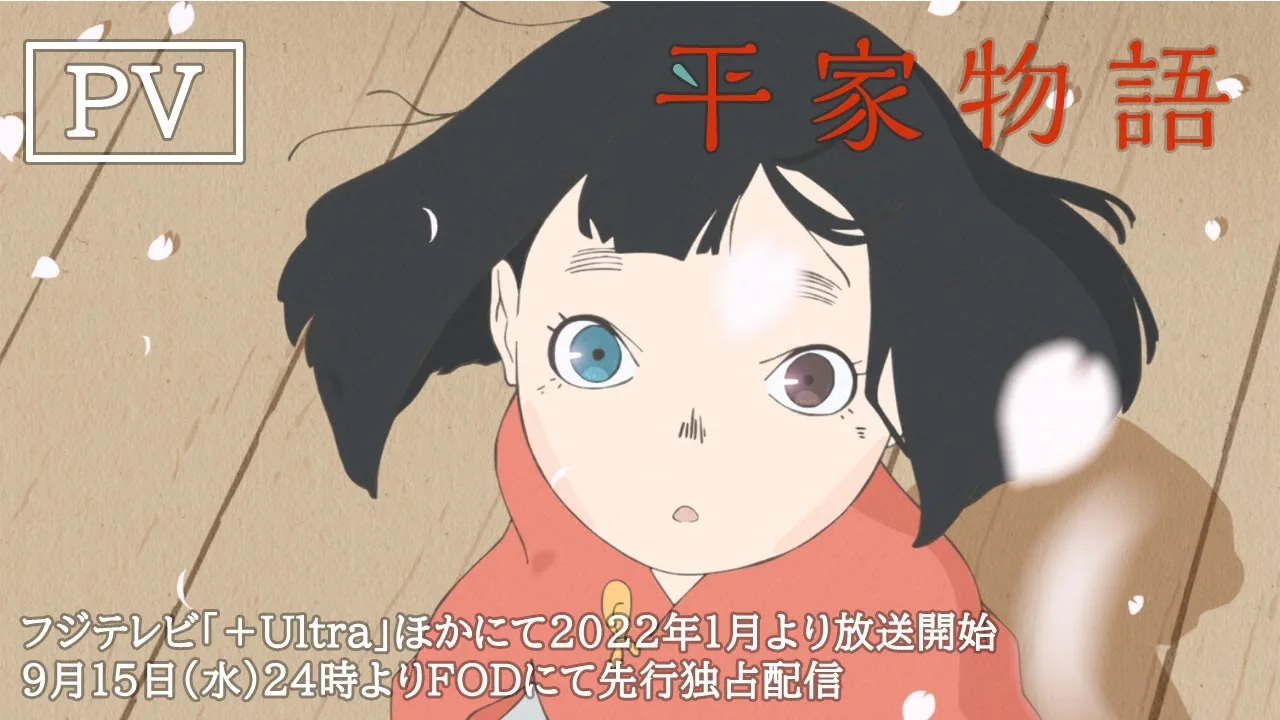
Its protagonist is Biwa, a young biwa minstrel with a right eye that sees the future and a left eye that sees the dead. Through a certain event, she is taken in by Taira no Shigemori, eldest son of the Heike leader Taira no Kiyomori, and comes to live with the Heike clan at the height of its glory.
In Biwa's eyes was reflected the future of this clan destined to fall. Resisting the fate of ruin she cannot help but see, she quietly keeps watching the Heike's glory and decline, and the turbulent era of the Genpei War.
Airing from January 2022, directed by Naoko Yamada, produced by Science SARU, with music by Kensuke Ushio. "The sound of the Gion Shoja bells echoes the impermanence of all things" — a soul-stirring masterpiece that delicately depicts the beauty of impermanence. 🏯
📝 Highlights & Appeal Light spoilers
01① The Visual Beauty of Naoko Yamada & Science SARU
The delicate, beautiful visual expression by director Naoko Yamada (A Silent Voice) is stunning. Every depiction of light and gesture captivates the heart.
02② The Perspective of Biwa, Who Sees the Future
Biwa's perspective — she cannot help but see the fate of ruin — gives the story poignancy and depth. Standing by her feelings, the tears won't stop.
03③ A Poignant, Beautiful Tale of Impermanence
The impermanence of a once-glorious clan falling is depicted as poignant yet beautiful. The fleeting nature of human life shakes the heart.
04④ The Vivid Human Drama of the Heike
Historical figures are drawn with care as "living people" who worry and love. You can deeply empathize with each one's feelings.
05⑤ Kensuke Ushio's Heart-Resonating Music
Kensuke Ushio's serene, beautiful score elevates the story's emotion to its limit. With the tone of the biwa, you're immersed in the world.
06⑥ Character Concepts by Fumiko Takano
Character concepts by manga artist Fumiko Takano radiate a unique, gentle charm. Their graceful presence colors the world of the work.
07⑦ Textbook History Becomes a "Story"
Events from the textbook, like the Genpei War and Dan-no-ura, come alive as vivid drama. History feels much closer to home.
08⑧ Theme Songs by Hitsujibungaku & agraph
The OP "Hikaru Toki" (Hitsujibungaku) and ED "unified perspective" beautifully color the work. Songs that stand by this tale of impermanence stay with you.
💡 Key Points & Predictions Some spoilers
Ahead, the once-glorious Heike clan, reaching its peak under Kiyomori's power, gradually walks toward the ruin that eventually comes. As Minamoto no Yoritomo and Yoshitsune raise their armies, the era plunges into the turmoil of the Genpei War. Resisting the fate of ruin she cannot help but see, Biwa keeps watching the life and death of each of the Heike, biwa in hand. The Genpei War and the Battle of Dan-no-ura from the textbooks are drawn as vivid human drama, and the poignancy of impermanence presses on the heart. It heads toward a soul-stirring climax that fully depicts the fleeting beauty of human life. 🏯
🧾 Story So Far Contains spoilers
Late Heian period. Under Taira no Kiyomori, the first samurai to reach the pinnacle of power, the Heike clan was at the height of its glory. One day, Biwa — a young biwa minstrel with a right eye that sees the future and a left eye that sees the dead — is drawn into conflict because of her special eyes. Taira no Shigemori, Kiyomori's kind eldest son, takes her in, and Biwa comes to live in the Heike residence. Shigemori, too, has an eye that sees the dead and senses the coming ruin of his clan. While opening her heart to the Heike, Biwa aches at the future of ruin reflected in her eyes, quietly watching the era of glory and decline.
✅ Recommended Viewing Points
Highly recommended for anyone who wants a historical literary drama that stays deep in the heart, alongside beautiful visuals. The delicate direction only Naoko Yamada could bring, and the emotion born from Kensuke Ushio's music, are one of a kind. Fans of delicate human portrayals like A Silent Voice, or of works that quietly shake the heart, will be especially hooked. The Heike, once just names in a textbook, are drawn as "living people" who worry and love, and you'll weep at their glory and ruin. A masterpiece that fully depicts the beauty and transience of impermanence — one to watch at least once in a lifetime. 🏯
👀 Trivia & Fun Facts
💫 Unresolved Foreshadowing Contains spoilers
- Whether the future of "the Heike's ruin" reflected in Biwa's right eye can be resisted.
- What Taira no Shigemori, who sees the dead, thinks of his clan's fate and how he lives.
- The Genpei War and the era's great upheaval, begun by the armies of Yoritomo and Yoshitsune.
- How the Heike, at the peak of glory, head toward decline and meet their end.
💌 Predicted Viral Quotes for Next Season
— The all-too-famous opening passage that runs through the whole story.
"I can see it — the future in which this clan falls."
— A line expressing the earnest feeling of Biwa, who bears the fate of ruin.
"I'll watch to the end — the proof that these people lived."
— A memorable line where Biwa's kindness shows, still caring for people in the face of impermanence.