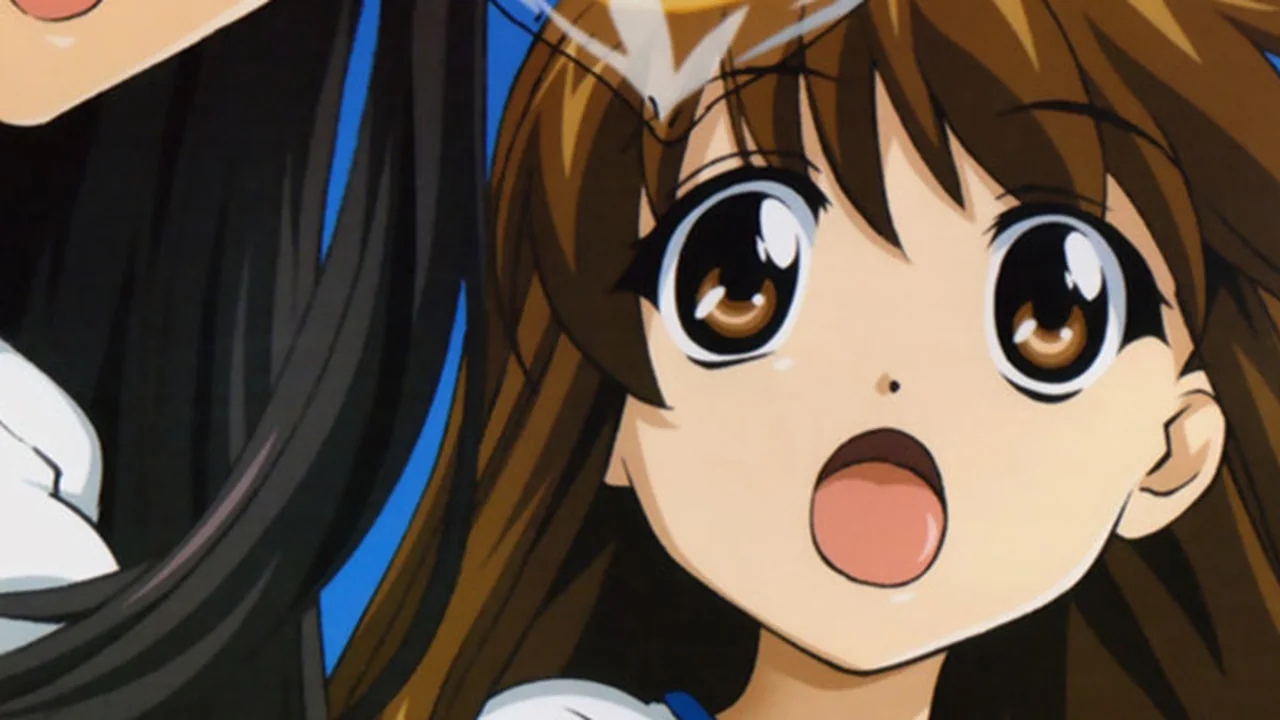
2005年秋アニメ
はっぴぃセブン ~ざ・テレビまんが~
トライネットエンタテインメント/スタジオ雲雀
学園ファンタジーコメディ
2005年10月2日〜12月25日(全13話)
Happy Seven: The TV Manga is a TV anime based on Hiroyuki Kawasaki's light novel (illustrated by COM, published under Super Dash Bunko), which aired for 13 episodes on independent UHF stations and others from October 2 to December 25, 2005. The protagonist is Kikunosuke Kawakawa, a boy who has been plagued by nightmares since childhood, with misfortune always striking on the days he has one. One day, after falling from a train platform, he's rescued by beautiful girls who each wield the power of one of the Seven Lucky Gods. They are descendants of the 'Ihitoshu,' a spiritual combat group originally organized under the Heian-era imperial court to fight evil spirits, reformed in the Edo period, and reconstituted once more in the present day as 'Happy Seven.' Set at the private Tenkyuji Academy, this school fantasy comedy follows Kikunosuke and the Seven Lucky Gods girls as they drive away evil spirits amid plenty of good-luck charm and slapstick chaos.
📝 Highlights
👥 Characters
💫 Foreshadowing & Quotes
❓ FAQ
🌟 Featured Comments
📝 Highlights & Appeal Light spoilers
01① A beautiful-girl fighting squad modeled on the Seven Lucky Gods
Girls wielding the powers of the Seven Lucky Gods — Daikokuten, Bishamonten, Benzaiten, Ebisu, Hotei, and Jurojin — each fight evil spirits using their own unique personalities as weapons.
02② Nightmare-prone boy Kikunosuke Kawakawa as the lead
A boy cursed to suffer misfortune every time he has a nightmare gets swept into the story after his fateful encounter with Happy Seven.
03③ A lineage tracing back to the Heian-era 'Ihitoshu'
Happy Seven's origins trace back to the 'Ihitoshu,' a spiritual combat unit formed under the imperial court in the Heian era and later reconstituted in the Edo period.
04④ A school comedy set at Tenkyuji Academy
The Happy Seven members live out school life as club members and advisor of the 'Fortune Research Club,' balancing everyday antics with sudden battles.
05⑤ Twin sisters Kotobuki No. 1 & 2 share the same voice actress
Twin sisters Mina and Nami Kotobuki are both voiced by the same actress, Nami Miminami, in a distinctive dual-role casting choice.
06⑥ A fated showdown with the evil god Kokuanten
Kokuanten, an evil deity positioned as the polar opposite of the Seven Lucky Gods, appears as a formidable foe standing in Happy Seven's way.
07⑦ Little Non's OP 'Akiramenaide' colors the whole series
The opening theme, entirely written, composed, arranged, and performed by Little Non, plays throughout all 13 episodes.
08⑧ A behind-the-scenes name change from 'Shitennoji Academy'
Right up until the anime adaptation, the school was named 'Shitennoji Academy' — but it was renamed 'Tenkyuji Academy' after a real school in Osaka with the same name raised an objection.
💡 Key Points & Predictions Some spoilers
The root cause of Kikunosuke's nightmare curse, and how his fated rivalry with Kokuanten deepens, are key things to watch. How everyday life at Tenkyuji Academy intersects with the battles against evil spirits is also worth following.
🧾 Story So Far Contains spoilers
Kikunosuke Kawakawa, a boy doomed to misfortune whenever he has a nightmare, ends up falling from a train platform after one of his own pranks backfires. He's rescued by Happy Seven, a group of girls wielding the power of the Seven Lucky Gods. Learning that they are descendants of the Heian-era 'Ihitoshu,' Kikunosuke begins life at Tenkyuji Academy alongside them, facing off against evil spirits together.
✅ Recommended Viewing Points
A show built on the unique idea of reimagining the Seven Lucky Gods as a beautiful-girl fighting squad, blended with the breezy chaos of a school comedy — and it moves with the brisk pacing typical of its light novel origins.
👀 Trivia & Fun Facts
The school in the story was originally named 'Shitennoji Academy' right up until the anime adaptation, but was changed to 'Tenkyuji Academy' after a real school of the same name in Osaka raised an objection. The role of Mahiru Oki (Ebisu) is also notable as the one character whose voice actress changed from the earlier drama CD version.
Kikunosuke Kawakawa CV: Jun Fukuyama
The series' protagonist, a boy who has been plagued by nightmares since childhood and is doomed to misfortune every time he has one.
Kuriya Kuroda (Daikoku) CV: Houko Kuwashima
A Happy Seven member who wields the power of Daikokuten, taking on a leader-like role among the group.
Tamon Kitayama (Bishamon) CV: Chiemi Chiba
A combat-focused member wielding the power of Bishamonten, who charges bravely into battle against evil spirits.
Okiku Benten (Kiku Shinsugawa) CV: Mai Nakahara
A member wielding the power of Benzaiten, bringing elegance and artistic flair to the group.
Mahiru Oki (Ebisu) CV: Yuu Kobayashi
A member wielding the power of Ebisu, notably the only role whose voice actress changed partway through the franchise.
Miku Munakata (Hotei) CV: Yuko Sumitomo
A member wielding the power of Hotei, known for her easygoing, big-hearted personality.
Mina Kotobuki (Kotobuki No. 1) CV: Nami Miminami
One of a pair of twin sisters wielding the power of Jurojin, working as a duo alongside her sister Nami.
Nami Kotobuki (Kotobuki No. 2) CV: Nami Miminami
Mina's twin sister, also voiced by Nami Miminami in the same dual-role casting.
Shojo CV: Tomoko Kaneda
A mysterious yokai character connected to Happy Seven, adding comic relief throughout the story.
Kokuanten CV: Kikuko Inoue
An evil deity positioned as the polar opposite of the Seven Lucky Gods, appearing as a formidable enemy standing in Happy Seven's way.
💫 Unresolved Foreshadowing Contains spoilers
- The root cause of Kikunosuke's nightmare-triggered misfortune remains a mystery running through the entire series.
- The goals and true nature of Kokuanten, positioned as the Seven Lucky Gods' polar opposite, is another point worth watching.
- The full history of how the Ihitoshu have been reformed across the Heian era, the Edo period, and the present day shouldn't be missed.
💌 Predicted Viral Quotes for Next Season
"Good fortune, arrive!" — Happy Seven's signature declaration when confronting an evil spirit.
"Ugh, I had that nightmare again..." — Kikunosuke's resigned line whenever he senses misfortune coming, capturing the show's tone.
"In the name of the Seven Lucky Gods." — the members' rallying cry as they unleash their powers.
What kind of anime is “Happy Seven: The TV Manga”?
Happy Seven: The TV Manga is a TV anime based on Hiroyuki Kawasaki's light novel (illustrated by COM, published under Super Dash Bunko), which aired for 13 episodes on independent UHF stations and ot…
What are the theme songs (OP/ED) of “Happy Seven: The TV Manga”?
You can find the theme songs of “Happy Seven: The TV Manga” ranked by view count in the anime song ranking on the homepage. Each song’s page also shows a chart of its view-count history.
How can I rate or comment on “Happy Seven: The TV Manga”?
Use the rating section on the left (PC) or top (mobile) to give a star rating (out of 10) or a like. You can also share your thoughts in the comment box at the bottom of the page. A nickname is optional.